
Saturday morning in Pointe-Claire Village. The waterfront pathway fills with cyclists and joggers, families stopping at the cafés along Lakeshore Road. Children climb on the beach rocks while parents watch from benches overlooking Lac Saint-Louis. This has been the rhythm here for generations — a village core preserved within suburban sprawl, where the lake remains the organizing principle and domestic life unfolds at a different scale.
The West Island has been Montreal's primary family territory for seventy years, and what draws buyers remains consistent: space, water access, and neighbourhoods built at a residential scale. Backyards large enough for vegetable gardens and trampolines. Basements that become workshops, gyms, and playrooms. Streets quiet enough that children bike to friends' houses without parents coordinating every movement. For families seeking houses for sale in the West Island, it is about having room to host Thanksgiving without borrowing chairs, to let children play outside unsupervised, to breathe.
A Village Within the Sprawl

The West Island stretches across the western third of Montreal Island, a collection of municipalities that share infrastructure, school boards, and a residential model built entirely around families. What distinguishes it from typical North American sprawl is the lake. Lac Saint-Louis bounds the territory to the south and west, creating kilometres of waterfront access — beaches, parks, and pathways that connect communities and provide environmental amenity rare in suburban developments.
Pointe-Claire sits at the geographic centre of this territory. The municipality stretches from Highway 40 south to the lakeshore, housing both the Fairview shopping corridor and Pointe-Claire Village, one of the West Island's few walkable cores. Heritage buildings, independent boutiques, waterfront cafés — it is the place where suburban families can approximate village life. The lakeshore pathway extends in both directions from here, connecting to Beaconsfield's tree-lined streets to the west and Dorval's airport access to the east.

The broader West Island extends as variations on this residential model. Beaconsfield offers established character and premium lakefront properties. Dollard-des-Ormeaux and Pierrefonds provide more accessible entry points. Kirkland balances residential and industrial uses. Baie-d'Urfé maintains a more rural character. But the pattern remains consistent: single-family homes on substantial lots, organized around schools, parks, and neighbourhood life.
Organizing Life Around Family
The West Island runs on a particular kind of social infrastructure. Youth hockey leagues, soccer on Saturday mornings, and swimming lessons at community pools. In Pointe-Claire, this means Bob-Birnie Arena, Terra-Cotta Park, and the Aquatic Centre. But the pattern repeats across the territory — birthday parties rotating through the same venues, weeknights organized around children's activities. This is how the place functions.

Schools anchor everything. Is the West Island good for families? The answer typically starts with education. The Lester B. Pearson School Board administers 21 elementary and 7 secondary English schools across the territory, making it Montreal's primary destination for anglophone families. French-language education exists through the Centre de Services Scolaire Marguerite-Bourgeoys, which operates 22 elementary schools and 3 secondary schools in the region. Properties near highly ranked schools move quickly and command premiums, whether in Pointe-Claire, Beaconsfield, or Kirkland. Parents time purchases around kindergarten enrolment.
Neighbours know each other because they wave from driveways and chat at soccer fields — an older form of social organization built on shared life stages rather than shared interests.
What the Houses Offer
West Island real estate consists primarily of bungalows, split-levels, and two-storey colonials built for practicality rather than distinction. While many homes date to the 1950s–1970s development boom, construction continued through the 1980s and 1990s. Older properties exist along the waterfront — 18th-century French colonial farmhouses in Pointe-Claire and Sainte-Anne-de-Bellevue, stone structures that predate the suburb by centuries — but these are rare and tightly held. New construction appears periodically, infill developments and townhouse projects that meet current building codes and energy standards, though the majority of inventory remains the postwar suburban home: typically 1,800 to 2,500 square feet on lots measuring 5,000 to 8,000 square feet. Three or four bedrooms. Two bathrooms. A finished basement adding another 800 square feet — rec room, laundry, storage.

The market reflects geography and positioning across the territory. Pointe-Claire's central location and village access command different values than properties further north in Dollard-des-Ormeaux or Pierrefonds, which offer more accessible entry points. Beaconsfield commands premiums for its established character and waterfront access along Lac Saint-Louis. At the upper end, waterfront properties — whether in Pointe-Claire, Beaconsfield, or Baie-d'Urfé — and larger estates in Senneville represent the region's most sought-after addresses.
The renovation calculation is constant for older stock. Many homes retain original kitchens and bathrooms, which means buyers either pay premiums for turnkey properties or budget for updates after purchase. Contractors who specialize in West Island renovations stay busy with kitchen gut-jobs, basement finishes, and bathroom modernizations. The house you buy is rarely the house you live in five years later.
Weekdays, Weekends, and the Drive
The commute from the West Island to downtown Montreal takes 25 to 40 minutes, depending on the starting point and route. From Pointe-Claire, residents drive via Highways 20 or 40, or take the commuter train from the Pointe-Claire station toward Central Station. For those working near Montréal-Trudeau Airport or in the region's commercial corridors, the commute disappears entirely. Remote work has shifted the equation further, making West Island real estate more viable for professionals who no longer commute daily.
Weeknights are structured around children's activities — hockey practice, swimming lessons, music classes. Weekends involve youth sports and backyard barbecues. Dining out means neighbourhood restaurants and family-friendly chains — in Pointe-Claire, that's Lakeshore Road in the village or Boulevard Saint-Jean — serviceable rather than destination-worthy, with menus that accommodate children without negotiation.

But for families at a life stage where weekends revolve around children's schedules, the West Island offers predictability, community, and enough space that domestic life does not require constant compromise.
Understanding the West Island housing market requires local knowledge — which streets near the best schools, which properties offer genuine waterfront access, and where renovation budgets make sense. For buyers seeking houses for sale in the West Island, working with brokers who know the territory makes the difference.
West Island real estate continues to define Montreal's suburban market: space, lakeshore access, and neighbourhoods organized around families who need room to live, with commute times to downtown Montreal averaging 25 to 40 minutes from central locations like Pointe-Claire.

The Enduring Appeal of the Golden Square Mile
How one neighbourhood continues to define what permanence means in Canadian real estate.

Navigating Canada’s Mortgage Landscape in 2025: What Buyers, & Sellers Need to Know
Words by Ryan La Haye | President Groupe RLH - Planiprêt
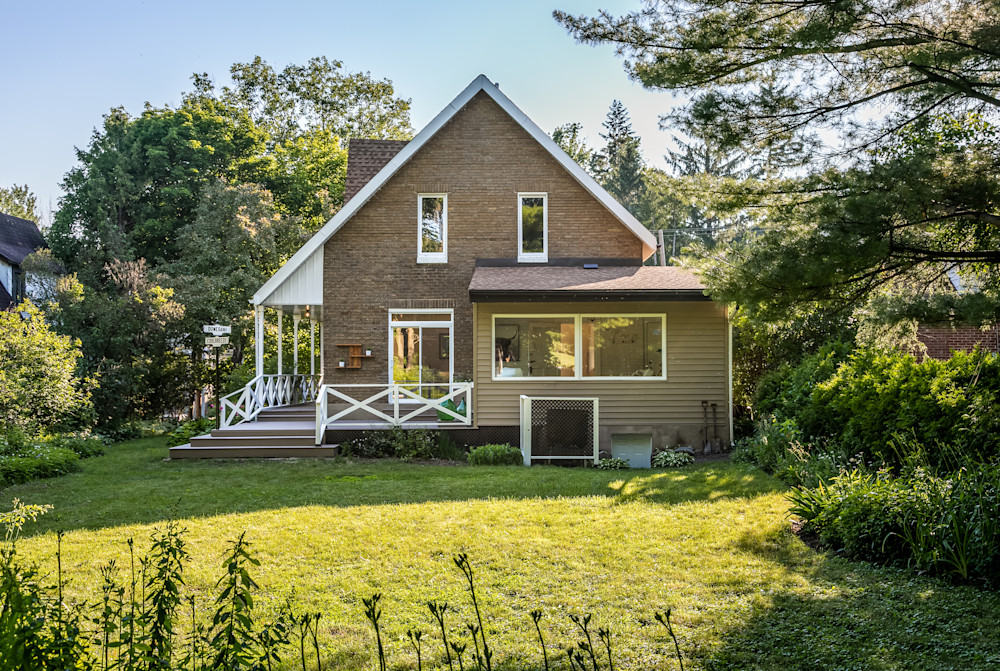
A 1930s Pointe-Claire Farmhouse Gets a Thoughtful Restoration
Words by Clay Sandhu | Photography by Archimed Studio